
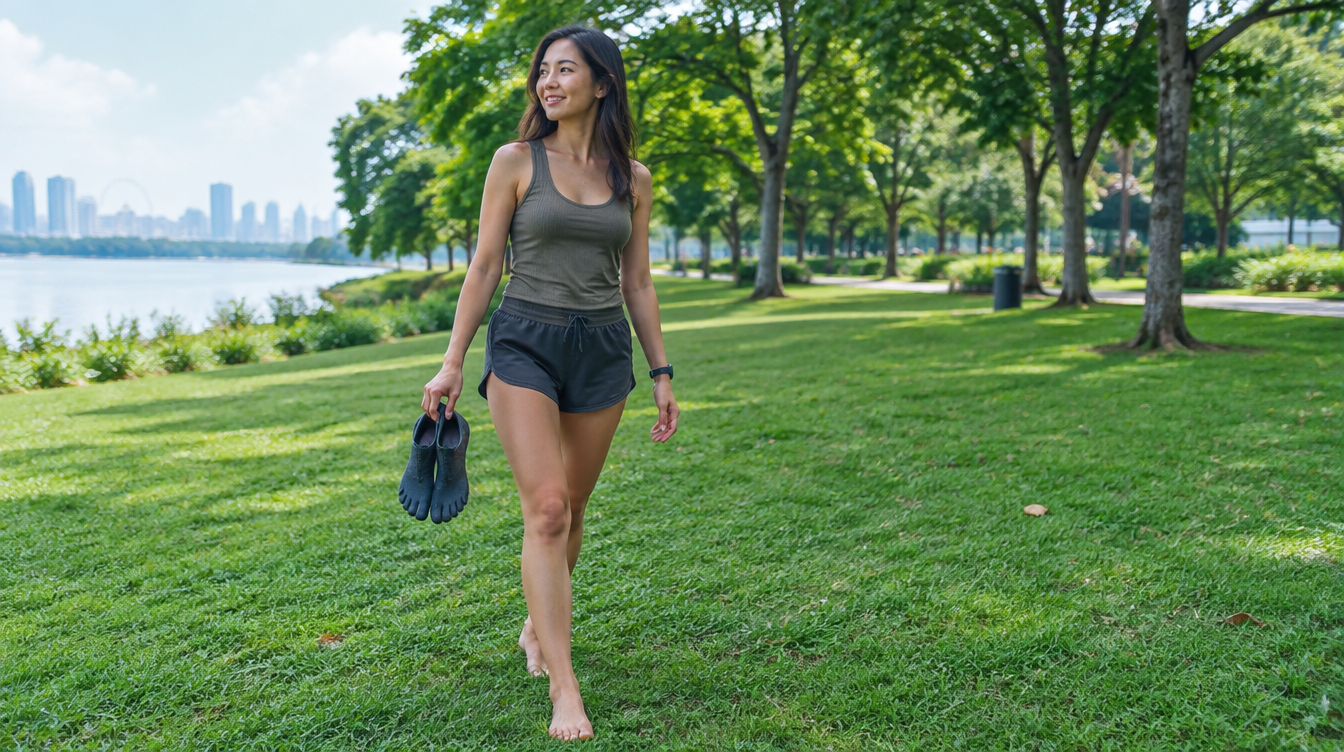
Scroll through enough fitness content lately and you will eventually land on someone swearing that ditching cushioned trainers for barefoot shoes fixed their aching feet for good.
The appeal makes sense on the surface. Modern running and walking shoes come stacked with cushioning, arch support and structure, and a growing number of people wonder whether all that engineering has quietly weakened the muscles our feet were originally built to handle on their own. Barefoot shoes and toe spacers have moved from niche running forums into mainstream wellness conversations, but the evidence behind them is more nuanced than either side of the debate tends to admit.
What Barefoot and Minimalist Shoes Actually Are
Barefoot or minimalist shoes strip away most of the cushioning, arch support and raised heel found in conventional footwear, leaving a thin, flexible sole that lets the foot move and flex more naturally. Toe spacers, meanwhile, are small devices worn between the toes to gently encourage them into a wider, more natural position, something many people lose after years in narrow, pointed shoes.
Both are marketed on a similar premise: that modern footwear has made our feet weaker and less mobile than they should be, and that going back to something closer to barefoot movement can reverse some of that.
The Case Supporters Make
There is genuine research behind part of this argument. A 2021 study published in Scientific Reports found that adults who spent more time in minimal footwear over a six-month period showed measurable increases in foot muscle strength and size compared with those who continued wearing conventional shoes. The theory is straightforward: muscles supported less by external structure have to work harder on their own, and like any muscle, they can adapt and strengthen with gradual use.
For people with generally healthy feet and no existing conditions, spending some time in minimalist footwear, particularly for walking or light activity, appears to offer genuine benefits for foot strength over time.
Where the Evidence Gets More Cautious
The same research, and plenty of clinical experience, also points to a less flattering side of the trend. Switching too quickly from heavily cushioned shoes to a completely minimal sole places sudden extra strain on the plantar fascia, Achilles tendon and smaller stabilising muscles of the foot, precisely the structures that were previously doing less work. Podiatrists regularly see a spike in overuse injuries among people who moved into barefoot shoes within a matter of weeks rather than months.
This does not point to a flaw in the shoes themselves so much as the pace of the transition, which is almost always what causes the trouble.
How Long a Safe Transition Actually Takes
Most podiatrists suggest allowing at least eight to twelve weeks to move from fully cushioned shoes into regular minimalist use, far longer than the two or three weeks many enthusiastic newcomers attempt. The foot’s intrinsic muscles, the small stabilisers that barefoot shoes ask to do more work, adapt at a genuinely slow pace compared with larger muscle groups such as the calves or quadriceps.
A sensible marker of progress is comfort the next day rather than comfort during the walk itself. Feeling fine immediately after a short session in minimalist shoes does not mean the tissue has finished adapting, since soreness from overuse often shows up twelve to twenty-four hours later, well after the shoes have been taken off.
Toe Spacers: A Smaller, Gentler Entry Point
Toe spacers tend to carry less risk than a full switch to minimalist shoes, largely because they are usually worn at home or during short, low-impact periods instead of for hours of walking or running. Many people find them genuinely comfortable for easing mild toe crowding or improving how the toes spread during balance exercises.
They are not a treatment for structural issues such as bunions or significant toe deformities, and expecting them to correct a long-standing problem on their own tends to lead to disappointment instead of results.
Who Should Be Careful With the Switch
Minimalist footwear and prolonged barefoot walking are not equally suitable for everyone. A few groups in particular should approach the trend with more caution:
- Anyone currently dealing with plantar fasciitis or Achilles tendon pain
- People with flat feet who rely on arch support for comfortable walking
- Those managing diabetes or reduced sensation in the feet
- Anyone recovering from a recent foot or ankle injury
For these groups, arch support insoles or shoes generally remain the safer choice, at least until any underlying issue has been properly assessed and addressed.
A Sensible Way to Try Minimalist Footwear
For those without any of the concerns above and genuinely curious about the trend, a gradual approach tends to work far better than an enthusiastic overnight switch:
- Introduce minimalist shoes for short walks first, not full training sessions
- Start indoors or on soft ground before trying pavements
- Alternate with your regular supportive shoes instead of replacing them entirely
- Stop and reassess if any new aches appear in the arch, heel or Achilles
Patience here pays off considerably more than enthusiasm alone.
Getting Personalised Guidance
Barefoot shoes and toe spacers are not a fad to dismiss outright, nor are they a universal fix for every foot complaint. Whether they suit your feet depends heavily on your current foot health, your activity level and how you make the transition.
If you are considering the switch and want to know whether your feet are a good candidate, a quick assessment at a podiatry clinic can flag any existing issues before you invest in a new pair of shoes, and help you build a transition plan that suits your feet specifically.


