
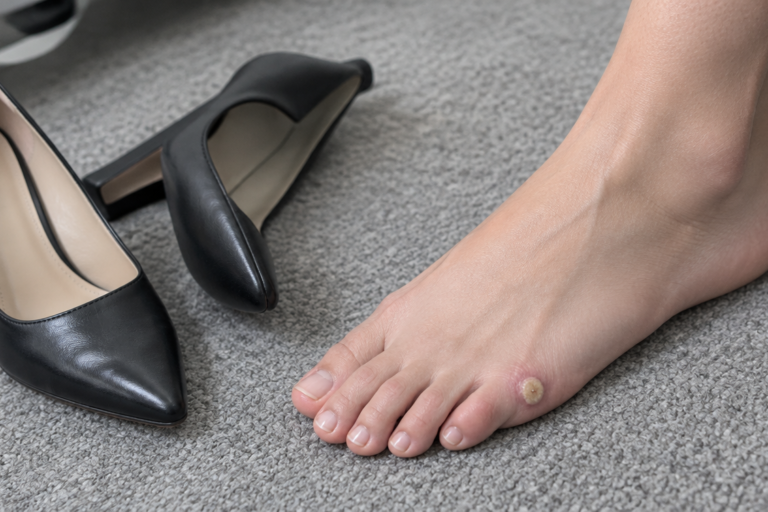
Nine hours in heels, back-to-back meetings, and by the time you finally sit down at your desk, that spot on your baby toe is throbbing again.
For many working women in Singapore, corns are simply accepted as the price of professional footwear, something to be managed with a plaster and ignored until the weekend. They do not have to be quite so inevitable, and understanding why they form in the first place makes it far easier to prevent them building up again.
What Corns Actually Are, and Why Heels Cause Them
A corn develops when skin repeatedly rubs or presses against a hard surface, most often the inside of a shoe, and thickens itself as a defensive response. Heels are particularly good at creating this exact scenario. They shift body weight forward onto the ball of the foot, squeeze the toes into a narrower space than they naturally occupy, and often include stitching or seams that press directly against the smaller toes for hours at a stretch.
The height of the heel makes less difference than most people assume. Even a moderate two-inch heel worn all day, five days a week, creates enough repeated friction to start a corn forming within weeks.
Why Office Wear Is Particularly Hard on Feet
Unlike a night out in heels, office wear means hours of near-continuous pressure with very little relief. There is rarely a chance to sit with your shoes off during back-to-back meetings, and many office floors are hard tile or polished concrete that offer no cushioning to offset the shoe’s own lack of give.
If a corn has already started forming and is becoming genuinely painful rather than a minor annoyance, seeing a doctor for feet before it worsens is a sensible early step, instead of waiting until walking itself becomes uncomfortable.
Corns, Calluses and Blisters Are Not the Same Thing
It helps to know the difference. A callus is a broader area of thickened skin, usually on the sole or heel, and is rarely painful on its own. A corn is smaller, more concentrated, and develops a hard core that presses into the nerve endings beneath it, which is exactly why corns tend to hurt far more than their size would suggest. A blister, by contrast, forms quickly from short-term friction and heals within days instead of building up over weeks. Plantar warts add another layer of confusion, and knowing whether you have a corn or wart matters, because one comes from pressure and the other from a virus, and each needs a different treatment.
Treating a corn like a blister, by simply covering it and waiting, rarely resolves the underlying pressure that created it.
Warning Signs a Corn Needs Professional Removal
Most corns can be managed with better footwear choices, but a few signs suggest it is time for proper treatment instead of home remedies:
- The corn is painful enough to change how you walk
- There is any sign of bleeding or discharge from the area
- Over-the-counter corn pads have not helped after several weeks
- You have diabetes or reduced circulation, where any skin breakdown needs closer monitoring
Footwear Adjustments That Actually Help at Work
A few practical changes tend to reduce corn formation considerably without asking anyone to give up professional dress codes entirely:
- Choosing a wider toe box, even within formal shoe styles
- Keeping heel height under two and a half inches for all-day wear
- Rotating between two or three pairs instead of wearing the same shoes daily
- Using a soft, breathable insole to reduce internal friction
- Bringing a second, more comfortable pair of shoes for the commute
Small changes like these add up considerably over a working week, even without giving up heels altogether.
When Corns Keep Coming Back
Some corns clear up after a single removal and never return, particularly when the footwear habit that caused them changes too. Others reappear in almost exactly the same spot within a few months, which usually points to an underlying structural cause rather than simple bad luck. A slightly prominent toe joint, a hammertoe, or a foot shape that naturally shifts more pressure onto one particular point can keep recreating the same friction no matter how carefully a corn is removed.
In these recurring cases, footwear adjustments alone tend to fall short. A podiatrist can assess whether a small silicone toe sleeve, a customised insole that redistributes pressure away from the problem area, or a minor adjustment to gait might address the underlying cause instead of only the symptom that keeps showing up on the surface.
Why DIY Removal Often Backfires
Cutting or shaving a corn with a razor or nail scissors at home is common, and it is also one of the more reliable ways to turn a manageable corn into a wound that gets infected. Without seeing the underlying core clearly, it is easy to cut too deep, particularly for people managing diabetes or poor circulation, where the risk of complications from a small cut is meaningfully higher than for the general population.
Professional removal addresses the hard core directly and safely, and it comes with practical advice on preventing the same corn returning to the same spot.
Getting Comfortable Again
Corns from office heels are common, but they are not something you have to simply live with until retirement or a permanent switch to flats. A combination of smarter footwear choices during the working week and proper treatment when a corn does form goes a long way towards more comfortable days at the desk.
If a corn has been bothering you for a while, the team at Feet First Podiatry Clinic can remove it safely and help you find footwear adjustments that fit around your working life, heels included.


