
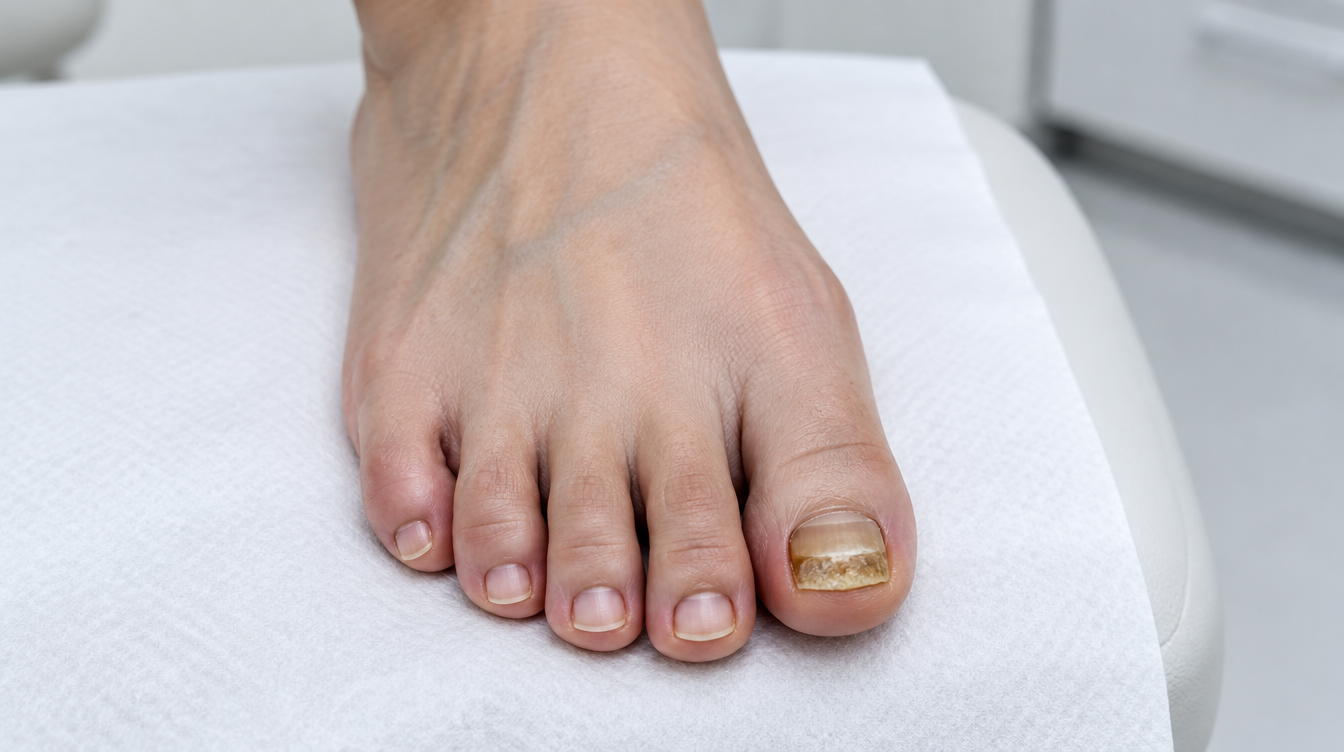
That yellowing, thickening toenail you have been hiding in closed shoes for months has a name, and increasingly, a treatment option that does not involve months of tablets.
Fungal toenail infections are common in Singapore’s warm, humid climate, and while topical creams and oral medication remain standard first-line treatments, laser therapy has become a genuine option for patients who have not responded well to either, or who would prefer to avoid oral antifungal medication altogether.
Why Fungal Toenails Are So Stubborn
Nail fungus lives within and beneath the nail plate itself, an environment that is naturally protected from topical treatments applied only to the surface. Toenails also grow slowly, often taking twelve to eighteen months to fully replace themselves, which means visible improvement takes considerably longer than most people expect even once treatment is working.
Warm, enclosed shoes, communal wet areas such as pools and gym showers, and minor nail trauma from tight footwear all create ongoing opportunities for fungal infection to take hold or return after treatment, which is part of why prevention deserves just as much attention as treatment itself.
How Laser Treatment Works
Laser therapy targets the fungus directly beneath the nail using focused light energy, which heats and damages the fungal cells while leaving the surrounding tissue largely unaffected. Unlike oral antifungal tablets, which work through the bloodstream and require monitoring of liver function over several months, laser treatment is applied locally and avoids that particular category of systemic side effect entirely.
This makes it a useful option for patients with liver conditions, those already taking multiple medications, or anyone who has tried oral treatment previously without success or without tolerating it well.
What a Typical Session Involves
A laser session for fungal toenails is generally quick and involves little to no discomfort, often described as feeling like a warm sensation rather than any kind of pain. Most patients need a course of several sessions spaced a few weeks apart, rather than a single treatment, since the fungus responds better to repeated exposure over the nail’s natural growth cycle.
There is no cutting, no anaesthetic and typically no downtime, so most patients return to normal activities immediately afterwards.
How Laser Compares With Other Treatments
Topical antifungal lacquers remain the gentlest first option for very mild infections limited to the edge of the nail, and they deserve a try before anything else for a case caught early. Their success rate drops considerably once the fungus has spread across most of the nail, largely because the lacquer struggles to penetrate deeply enough to reach it.
Oral antifungal tablets work well for many patients and are often the most cost-effective option, but they require several months of consistent use and periodic blood tests to monitor liver function, which not everyone finds practical or suitable. Laser treatment sits between these two options in terms of cost, generally more affordable than an extended course of oral medication when accounting for the monitoring involved, while working directly on the affected nail instead of through the whole body.
Is Laser Treatment Right for Everyone?
Laser therapy tends to suit patients with mild to moderate infections best, and it can also be combined with topical treatment for a more thorough approach in more established cases. It is generally not recommended as a sole treatment for very severe, long-standing infections affecting most of the nail, where a combination approach guided by a podiatrist tends to produce more reliable results.
A proper assessment beforehand helps confirm the diagnosis, since several other nail conditions can resemble fungal infection without actually being caused by fungus, and treating the wrong condition wastes both time and money.
Setting Realistic Expectations
Laser treatment improves the appearance and health of the nail over time for many patients, though it does not guarantee complete clearance in every case, and results vary depending on the severity of infection, how well the nail has been cared for since, and individual healing response. Visible improvement typically becomes noticeable only as the new, healthy nail grows out, which takes several months regardless of how effective the treatment itself has been.
Patience during this growing-out period is often the hardest part of the whole process, even when the treatment is working exactly as intended.
Preventing Reinfection After Treatment
Treatment alone will not keep fungus from returning if the conditions that allowed it to take hold in the first place remain unchanged. A few habits reduce that risk considerably:
- Wearing moisture-wicking socks and rotating shoes to let them dry fully between wears
- Avoiding bare feet in communal showers, pool areas and gym changing rooms
- Disinfecting or replacing old shoes and socks worn during the active infection
- Keeping nails trimmed and dry, particularly after swimming or exercise
- Choosing a medical pedicure over a salon visit where tools are properly sterilised between clients
Getting Started
Fungal toenails rarely resolve on their own, and the longer an infection sits untreated, the longer any treatment, laser or otherwise, tends to take to show results. If tablets and creams have not worked for you, or simply are not an option you are comfortable with, ask about laser treatment at your next visit.
The podiatrists at Feet First Podiatry Clinic can assess whether your infection is a good candidate for laser treatment and build a realistic plan around how quickly you would like to see results.


